Monerti (The landlord App)
Product Design
Bahraini landlords were managing properties through WhatsApp and Excel. We built the tool they didn't know they needed.
Project type: Zero to one product design, from blank canvas to live app
Role: Lead UX/UI Designer at LevelZ Technologies. Responsible for the full product experience ( four products). Visual design, illustration, UX writing, and design system
Industry: Proptech & fintech
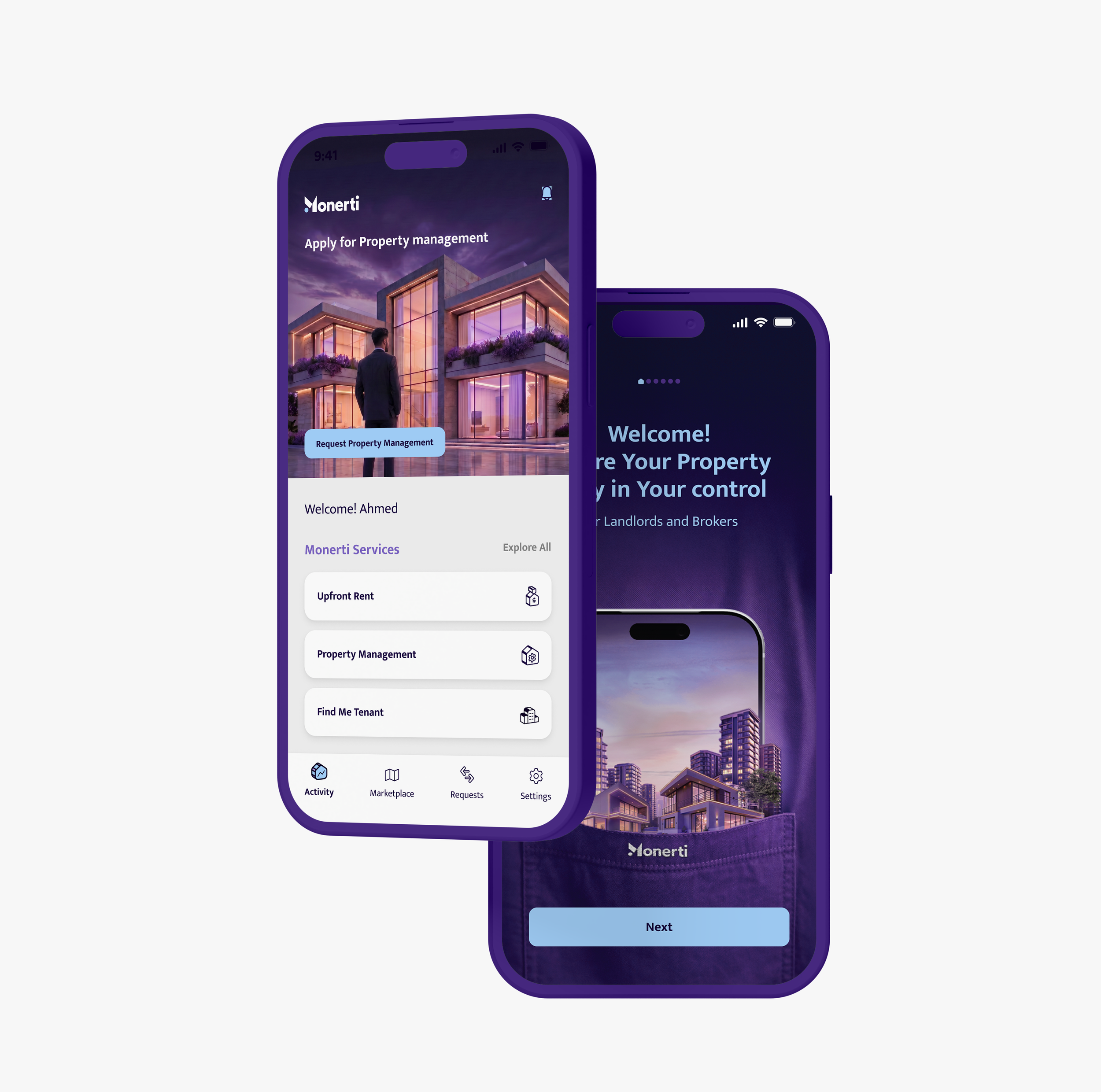
Monerti is a Bahraini proptech platform connecting landlords, brokers, and tenants through a shared marketplace, property management tools, and covering upfront rent financing and online payments. I designed the full product family across four surfaces. This case study covers the landlord app
Property management in Bahrain runs on WhatsApp
Rent payments collected in cash or through BenefitPay, maintenance requests sent over voice notes. For landlords managing two, three, or five properties, every tenant communication lived in a separate chat with no way to track anything.
The problem isn't that this system fails immediately. WhatsApp works well enough to get by. But "well enough" hides costs: no payment records, no way to spot a late payment without scrolling back through messages. At small scale, landlords absorb that friction personally. As number of properties grows, the system breaks.
There are no products to help the Bahraini landlords, so they defaulted to the tools they already had.
Regional research confirmed the gap. In the UAE, Keyper had built a solid product around rent now pay monthly, solving payment problem specific to Dubai's rental market. In Saudi Arabia, Rize was doing the same. Both products were well designed and growing. Locally, Bahrain had one real estate product: Bahrain Finder, a listings marketplace. Once a property was rented, its job was done. Everything after, payments, maintenance, communication, renewals, fell back to WhatsApp.
The gap wasn't a lack of awareness. It was a lack of infrastructure. No one had built the layer that sits between "property listed" and "lease ended."
That was the problem Monerti was designed to solve.
Competitive Landscape
To understand the gap, we looked at what existed locally, regionally, and in more mature proptech markets.
Bahrain Finder
Is the only property product built for the Bahraini market. It's a listings marketplace. It connects landlords to prospective tenants and stops there. Once a lease is signed, the platform has no further role. Payments, maintenance, communication, renewals all of it falls back to WhatsApp and phone calls.
Keyper (UAE)
is the closest regional product to what Monerti set out to build. It combines property management with a rent now pay monthly model for tenants while landlords receive the full amount upfront. It was built specifically around Dubai's rental market, where annual payments are the norm. Keyper has no presence in Bahrain
Rize (Saudi Arabia)
Solves the same financing problem in the Saudi context. Like Keyper, it's a payment splitting product first. However day to day property management, tracking maintenance, centralising communication, managing lease documents, is outside its scope. It operates exclusively in Saudi Arabia.
None of these products serve Bahraini landlords. Not because the market is too small, but because each product was built to solve a specific problem in a specific market. Bahrain had no equivalent.
The gap Monerti was built to fill
Challange 1
The original assumption was straightforward: landlords and tenants share the same platform, so building one app with two distinct flows made sense. It reduced development time and complexity and kept the product simple to maintain.
It didn't work.
In beta, users were confused. Landlord flows, listing a property, reviewing a tenant, approving a maintenance request, lived alongside tenant flows, searching listings, submitting maintenance requests, in the same space. The separation existed on paper. In practice, first-time users moved back and forth between contexts, unsure which flow is for them.
The confusion wasn't a navigation problem. It was a mental model problem. A landlord and a tenant have fundamentally different relationships with a property. Putting them in the same app assumed they had enough in common to share a starting point. They didn't.
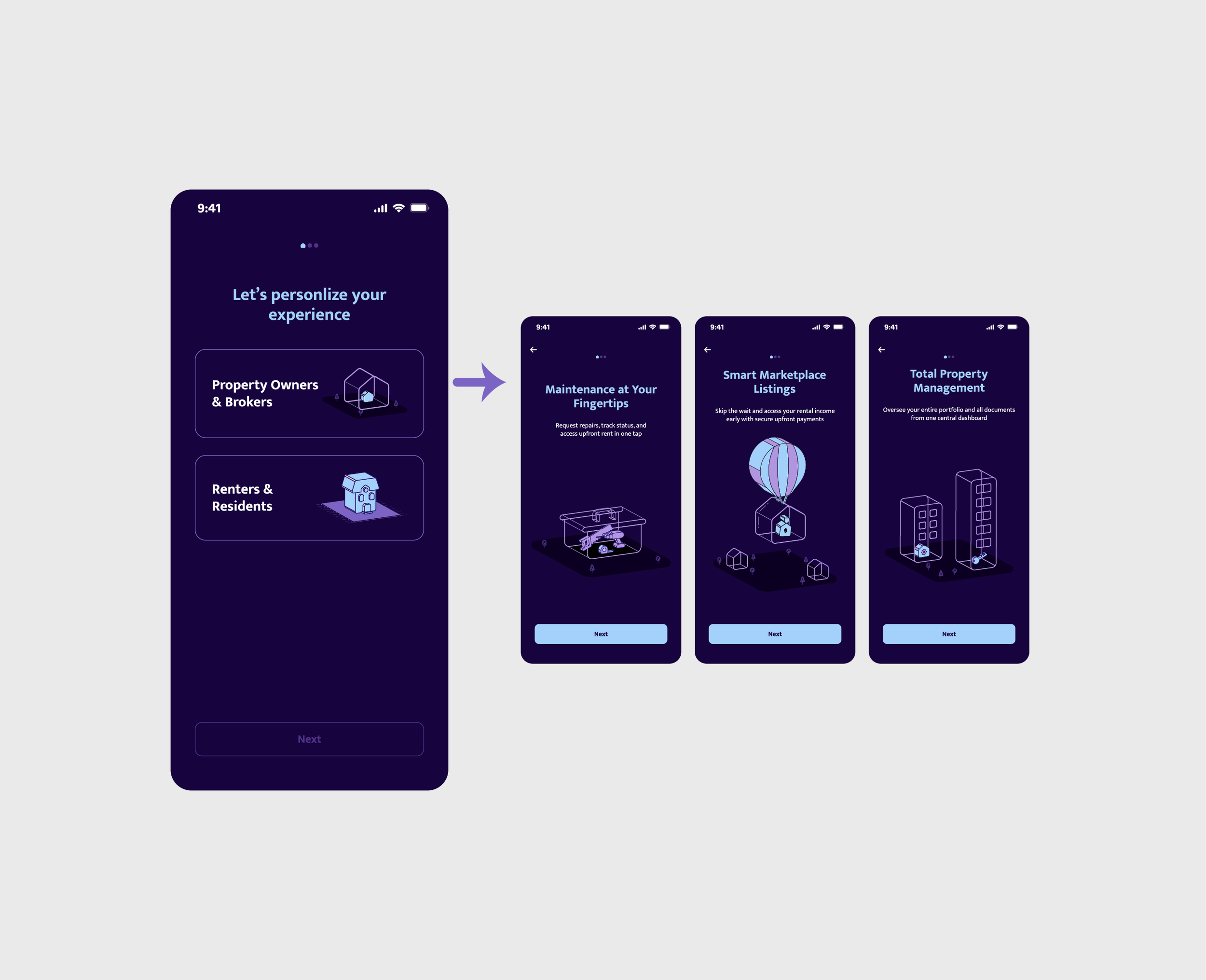
The decision: split the product into two separate apps, one for landlords and one for tenants, each with its own information architecture and its own tone. The split also created room to build deeper features for each user type without the complexity of designing for two fundamentally different mental models at once.
One app, two completely different users
Challange 2
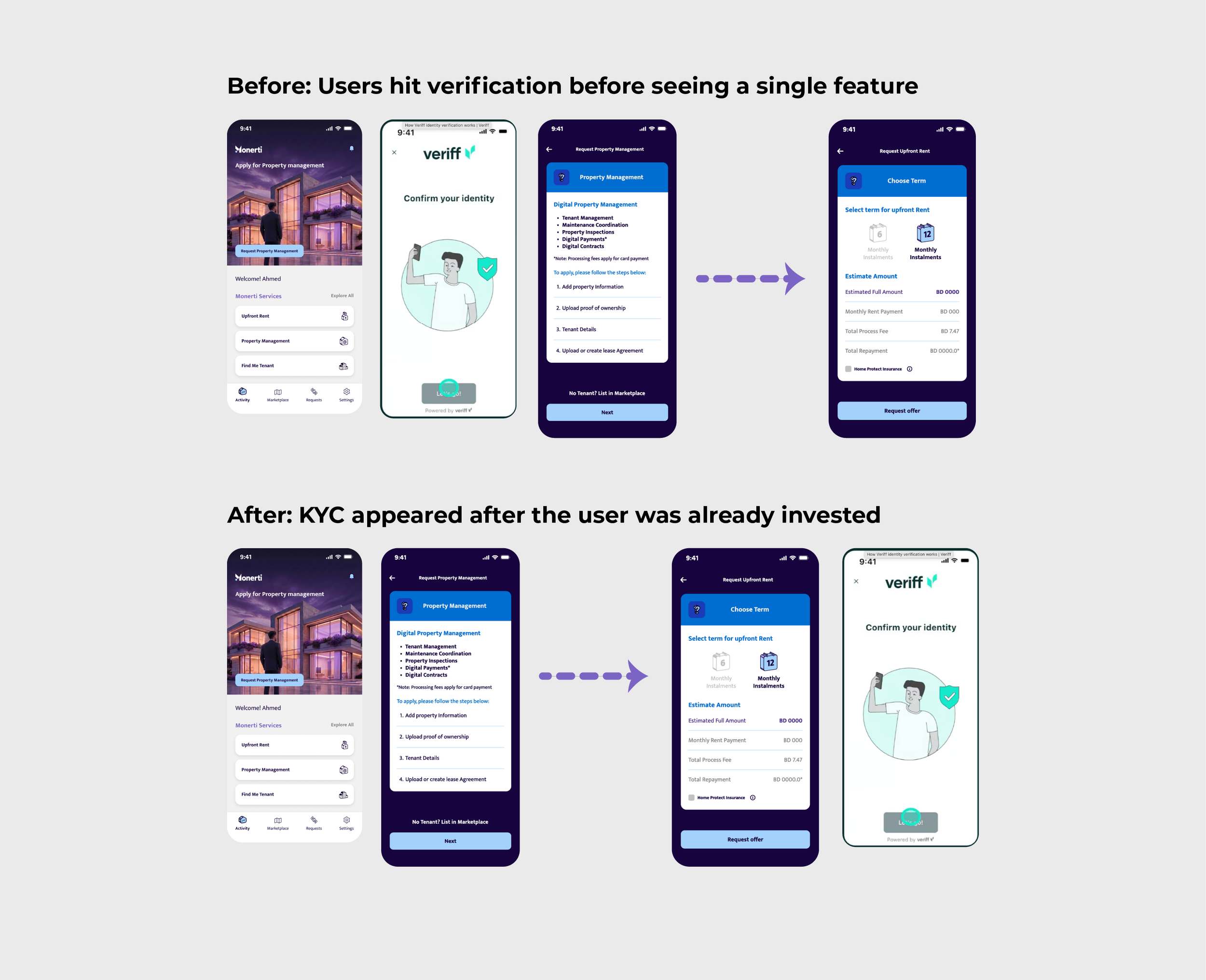
Every user on Monerti needed to go through identity verification before they could do anything meaningful. That made sense from a compliance and trust perspective.
The problem was timing.
For first time users, KYC sat at the start of every action flow. Eight screens minimum: document uploads, identity checks, waiting periods. A landlord who arrived wanting to list a property or request upfront rent financing hit a wall before they'd seen a single feature. Many didn't make it through.
The assumption behind KYC first was reasonable: verify early, then unlock the product. But it ignored a basic behavioural reality. Users don't trust with their personal information for a feature they haven't seen yet. They complete them when they know what they will get.
The decision: move KYC to the end of the flow, triggered only when a user is about to submit a listing or request a service. By that point they've already invested time in the product, seen what it offers, and have a concrete reason to finish.
The result: listing activity and service requests increased from 1 per week to over 10 per week in the weeks following the change.
KYC was killing conversions before users had a reason to care
Challange 3
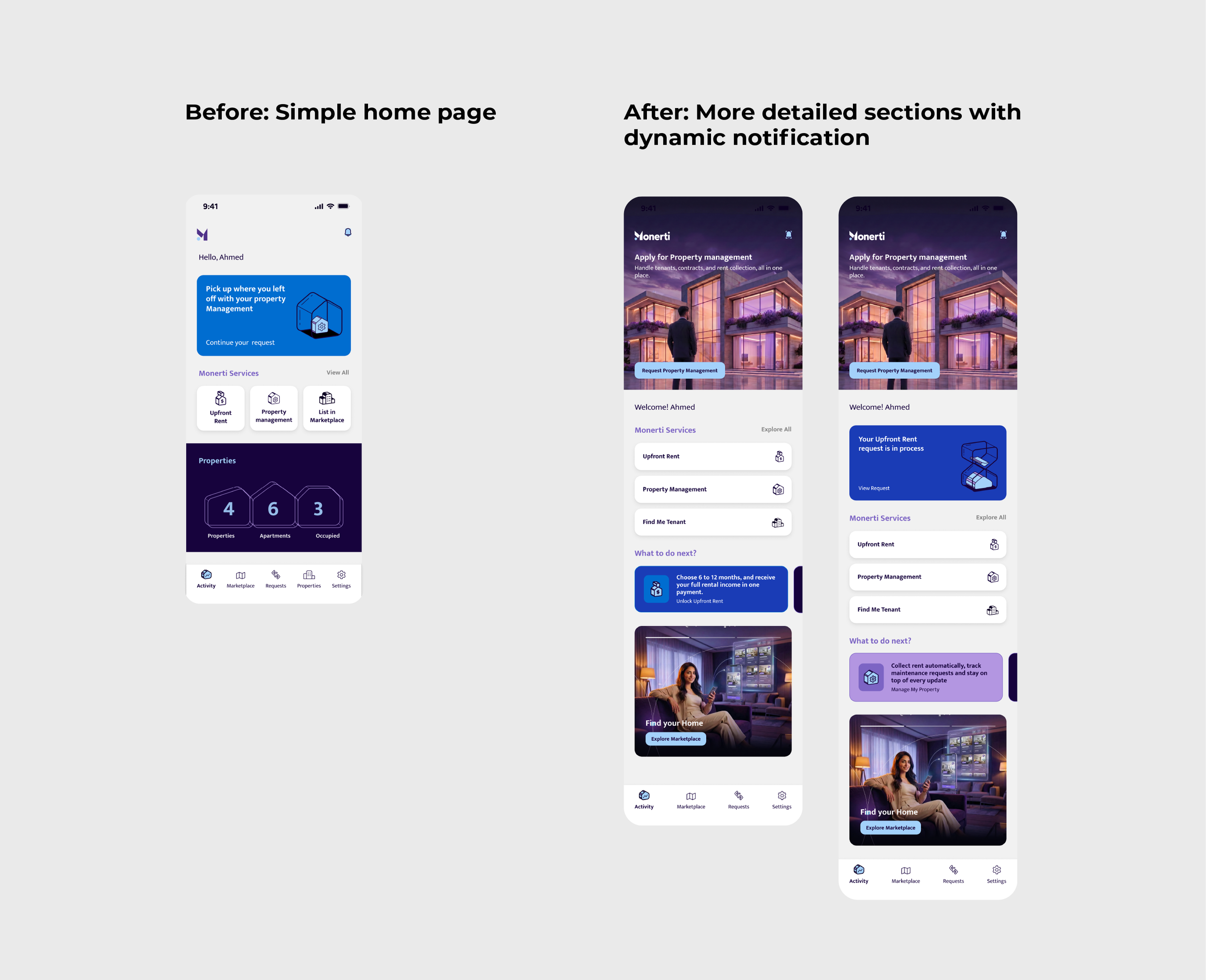
The original homepage was intentionally clean. A fixed banner at the top would show the next action, an important notification, or a service explanation if nothing was pending. The rest of the screen was minimal.
Still landlords were missing notifications
Post launch feedback made it clear this wasn't working. Not because the notifications weren't there, but because a single fixed banner at the top of a clean screen didn't carry enough visual weight to feel urgent. Users were scrolling past it or not registering it at all.
The decision: Redesign the homepage to surface information in sections rather than a single banner. Notifications now appear only when there is an action required or something important to see, giving them more weight when they do appear. Supporting content is organised into sections that explain services in context rather than filling space when nothing is pending.
Landlords were missing the things that mattered
Challange 4
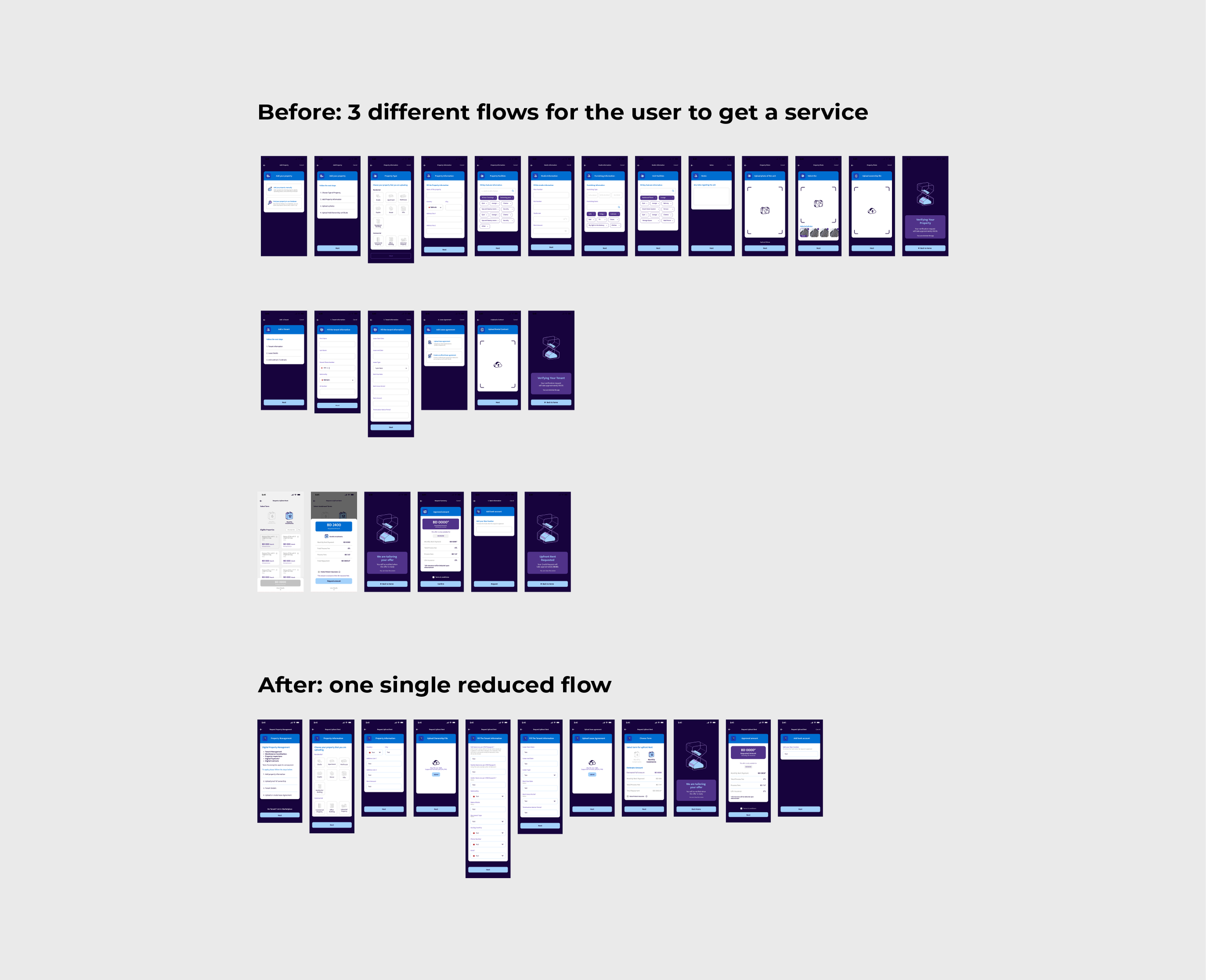
When a landlord wanted to request upfront rent financing or property management services, the flow required them to complete the full property listing process first: entering all property details, waiting for Monerti to verify the property, then adding tenant information, then waiting through a separate tenant verification stage. Each step involved a verification, and those regularly pulled in the customer service team to move things forward.
The process was too long and too dependent
The assumption behind this was that collecting everything upfront would reduce back and forth later. In practice it did the opposite it generated friction for users and operational load for the team.
The decision: reduce each service flow to the minimum information it actually required. A single verification stage replaced the multi-step sequence. Redundant information entry was removed. The customer service team's involvement in moving requests forward dropped significantly, because users could complete the process without getting stuck waiting on a handoff.
The verification process was creating a customer service dependency
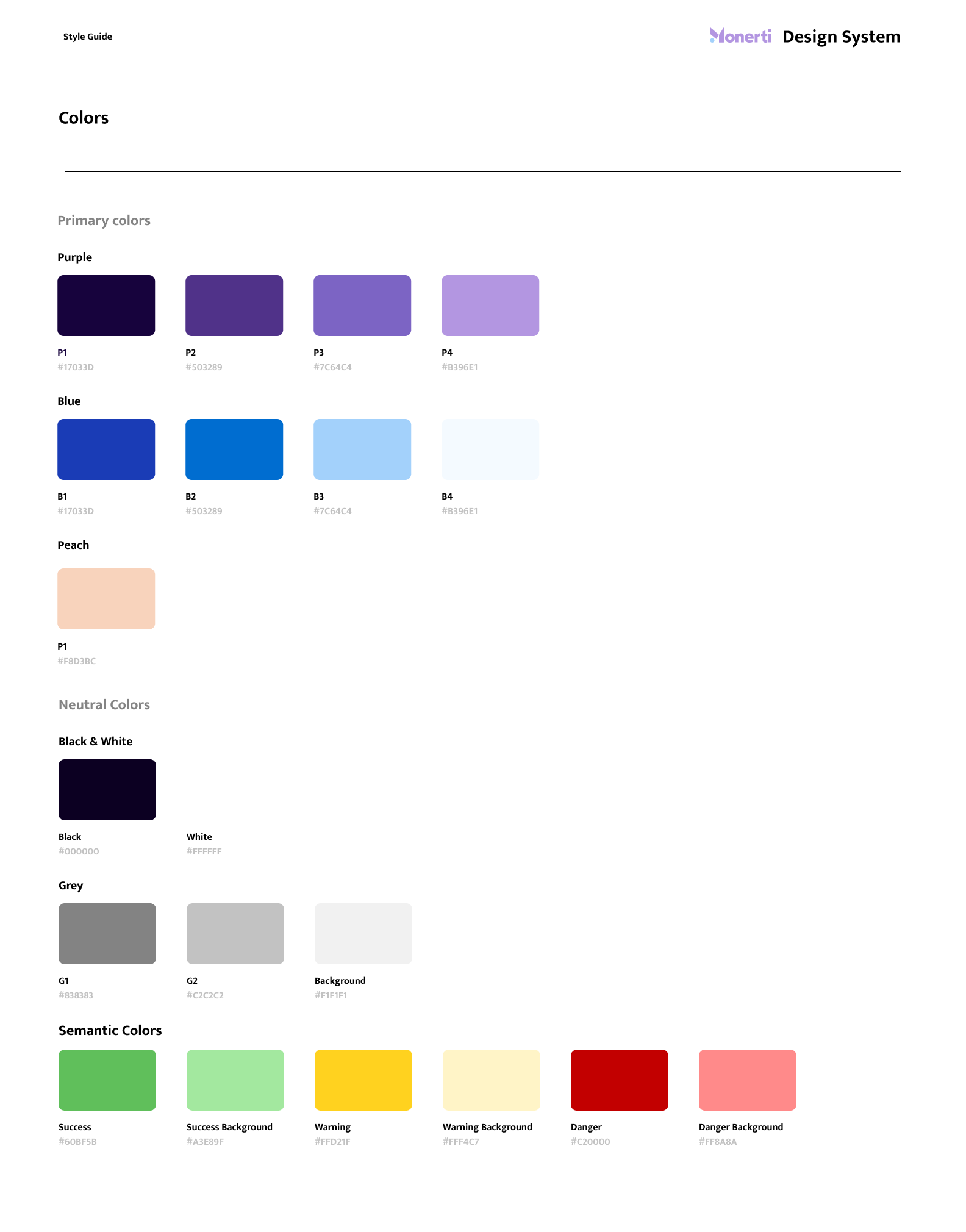
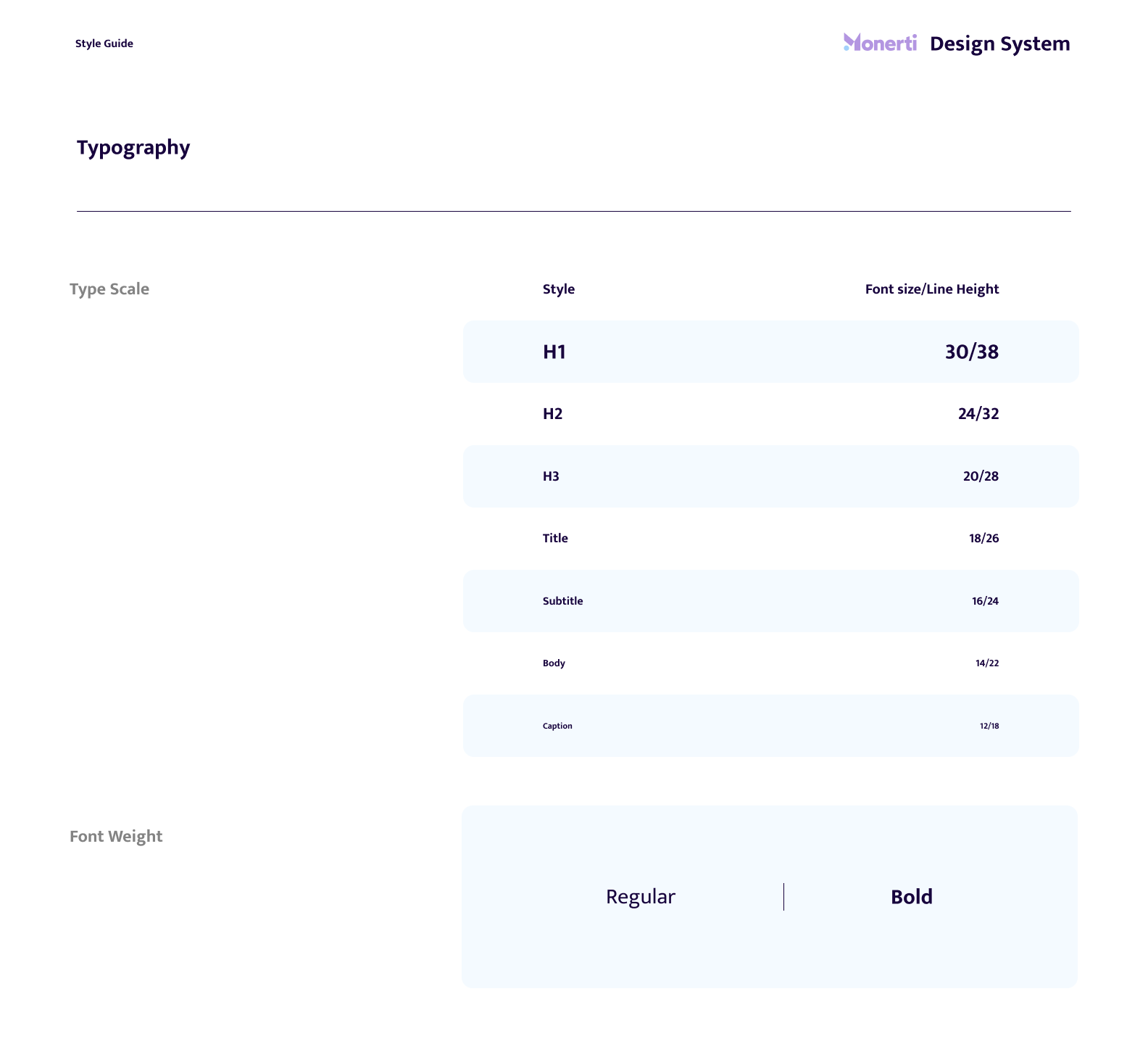
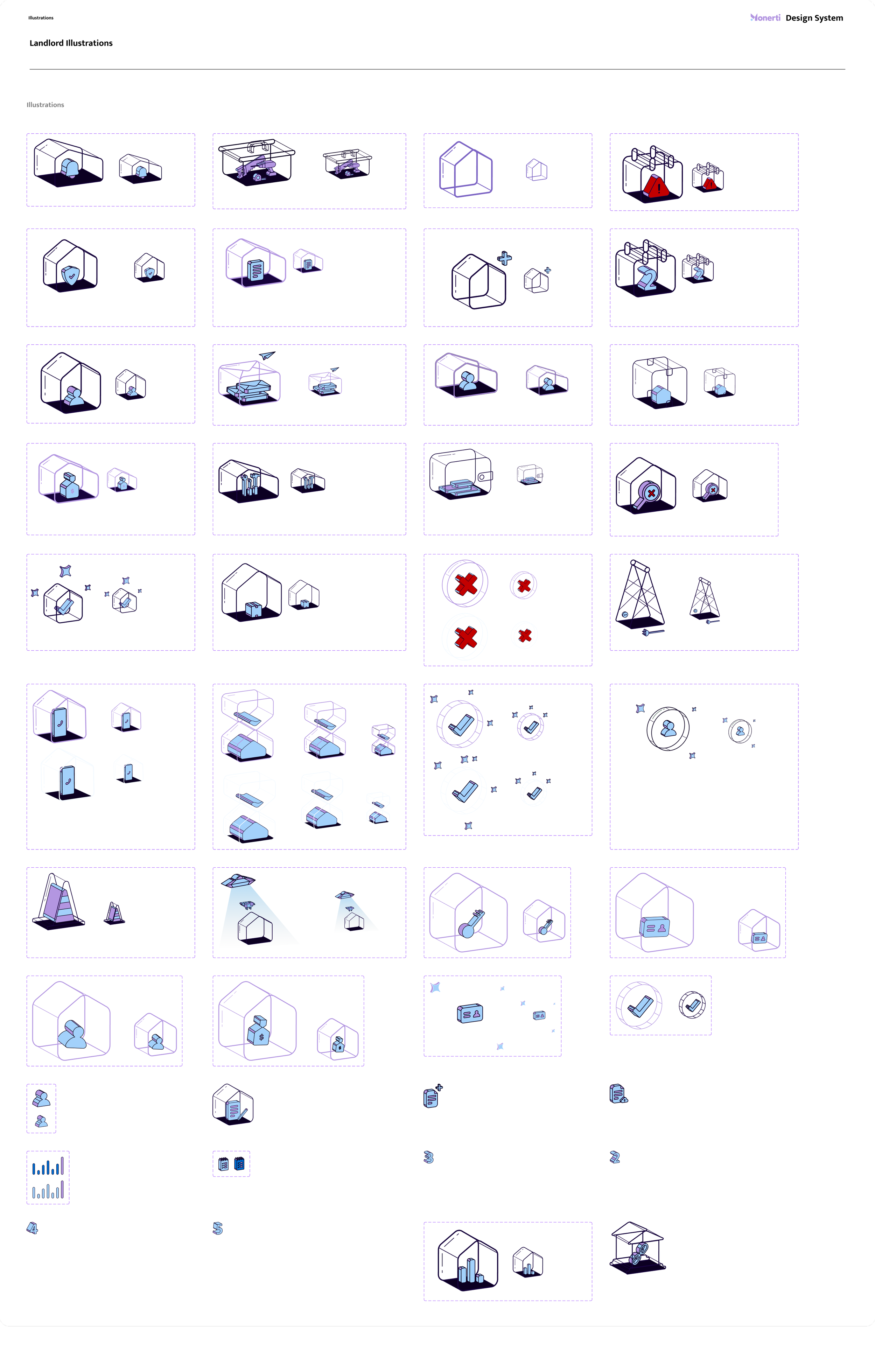
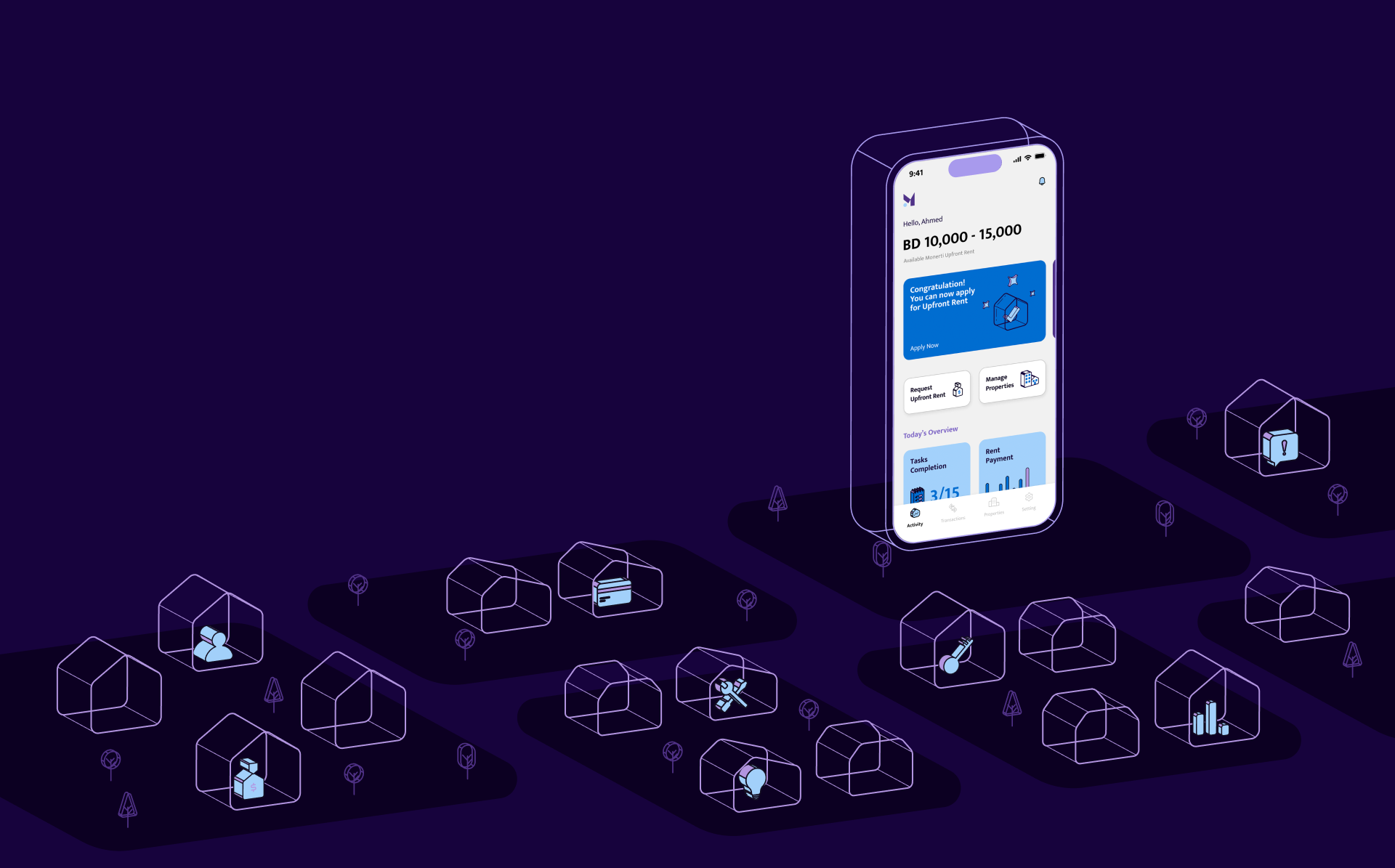
Comprehensive design system that brought consistency, clarity, and a more engaging experience